Alaska hit with record high temperatures Wave Fuels Wildfires & Dangerous Smoke, Melts Glaciers

Google||2.5 MIN to read .
Alaska's heat wave is driving wildfires and melting glaciers, choking the state’s biggest cities with smoke and bloating rivers with meltwater.
In Anchorage, home to about 40 percent of Alaskans, the National Weather Service issued a dense smoke advisory on Sunday warning against prolonged outdoor activity, along with advisories for the elderly and the sick to stay indoors.The Swan Lake wildfire in the Kenai National Wildlife Refuge, which has burned since a June 5 lightning strike and consumed more than 68,000 acres, prompted the National Weather Service to issue a dense smoke advisory.
March 2019 began with an unsettled weather pattern that brought warm, wet storms to the state, according to the Alaska Climate Research Center. By mid-month, a high-pressure ridge developed and stayed in place for weeks, producing mostly clear skies and very warm temperatures.
The average temperature for March 2019 set records at 10 of 19 ground-based weather stations in Alaska. Utqiaġvik (Barrow)—the northernmost town in the United States—saw its hottest March in more than 100 years. The town’s average high temperature in March is usually -12.6 degrees Fahrenheit (-24.7° Celsius). But in March 2019, the temperature averaged 5.9° Fahrenheit. Delta Junction, Fairbanks, and many towns broke temperature records. (You can see a list here.)
The “warm” month in Utqiaġvik did not mean it was a dry month. In March 2019, the town received more than four times the normal amount of rain and twice the amount of snow.
Alaska’s Heat Wave Fuels Wildfires and Dangerous Smoke, Melts Glaciers
The Rainbow 2 Fire burning approximately 15 miles west of Delta Junction and west of the Tanana River near Delta Creek, Alaska June 29, 2019 courtesy of Alaska Division of Forestry. Alaska Division of Forestry/Handout via REUTERS
"This very warm weather, on top of the warm May, the very early snowmelt, then we had those two weeks of lightning strikes, it’s the classic setup," Thoman said.
Melting glaciers and mountain snowfields are bloating rivers and streams across a large swath of south central Alaska, the NWS said. The melt has brought water levels to flood stage at the Yentna River northwest of Anchorage on Sunday, said NWS forecaster Bob Clay.
Alaska hit with record high temperatures Wave Fuels Wildfires & Dangerous Smoke, Melts Glaciers
.
"Certainly, for instance, above-normal temperatures in Cook Inlet right now are contributing to the very warm temperature that are being reported from Anchorage International," Thoman said. "If it had been a cold spring and a cool June and water temperatures were cooler, exactly the same kind of atmosphere pattern may well not produce record temperatures."
I hope you like this post Alaska hit with record high temperatures Wave Fuels Wildfires & Dangerous Smoke, Melts Glaciers .please don't cheap to share this article to your friends. Thanks for reading
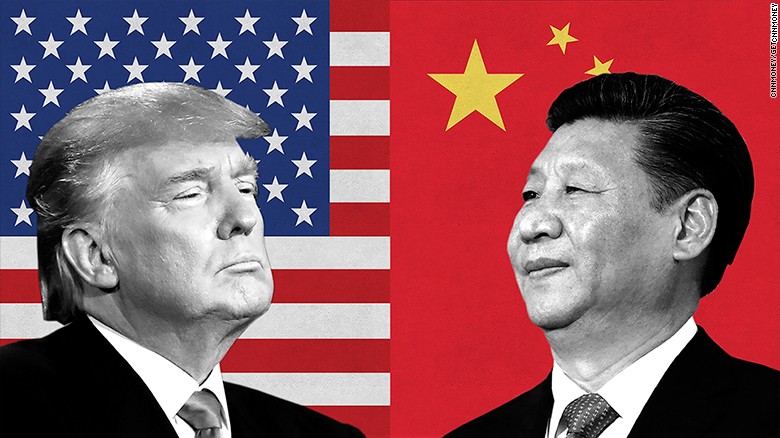
President Trump announced the trade truce after an 80-minute meeting with Chinese President Xi Jinping on the sidelines of the Group of 20 summit in Osaka, Japan.
"Basically we agreed today that we're going to continue the negotiation," Trump told reporters Saturday. "We're going to work with China on where we left off to see if we can make a deal."
In exchange, Trump said China had agreed to increase its purchases of U.S. agricultural products.
The U.S. and China have agreed to restart trade talks, and the Trump administration will hold off for now adding new and costly tariffs on some $300 billion in Chinese imports.
"We're holding on tariffs, and they're going to buy farm product," Trump said.
The temporary cease-fire does not end the trade war between the U.S. and China. The Trump administration is still charging 25% tariffs on some $250 billion worth of goods imported from China. Xi's government has retaliated by taxing U.S. exports, while at the same time reducing tariffs on competing products from other countries.
Those tariffs will remain in place while the U.S. tries to broker a trade deal with China that offers more protection for intellectual property and prevents the forced transfer of American technological know-how.
The Trump administration thought it was approaching such a deal until last month, when China balked at provisions the administration believed were already settled. Still, the president says he's cautiously optimistic that a comprehensive agreement is still possible.
"They would like to make a deal, I can tell you that," Trump said. "If we could make a deal, it would be a very historic event."
The president said for now, he will allow U.S. tech companies to keep supplying components to the Chinese telecom giant Huawei. National security experts worry the company, which makes cellphones and telecom equipment, could become a conduit for surveillance by the Chinese government. The president said Huawei's future business with the U.S. will be left for later in the negotiations.
"Huawei is a complicated situation," Trump said. "We agreed to leave that to the end."
Xi also cheered the trade truce, which avoids putting greater pressure on Chinese exports.
Trade was a dominant topic for Trump throughout the G-20 meeting. He raised it repeatedly during meetings with individual foreign leaders, including Japanese Prime Minister Shinzo Abe, German Chancellor Angela Merkel, and Indian Prime Minister Narendra Modi.
The president boasted of big trade deals that are in the works, but he offered no details.
Trump has not hesitated to impose protectionist measures. In addition to the China tariffs, he's slapped import taxes on foreign steel and aluminum, washing machines and solar panels.
The G-20 traditionally issues a formal statement opposing protectionism. The Trump administration warned before the summit it would not sign on to the statement if that warning — or another about the dangers of human-made climate change — were too strongly worded.
Although Trump's stance on climate puts him at odds with the rest of the G-20 leaders, he insisted he's not turning a blind eye to the hazards of a warming planet.
"I'm not looking to put our companies out of business," Trump said. "The powering of a plant — it doesn't always work with a windmill."
/cdn.vox-cdn.com/uploads/chorus_image/image/60050495/GettyImages_810758844.0.jpg)
>